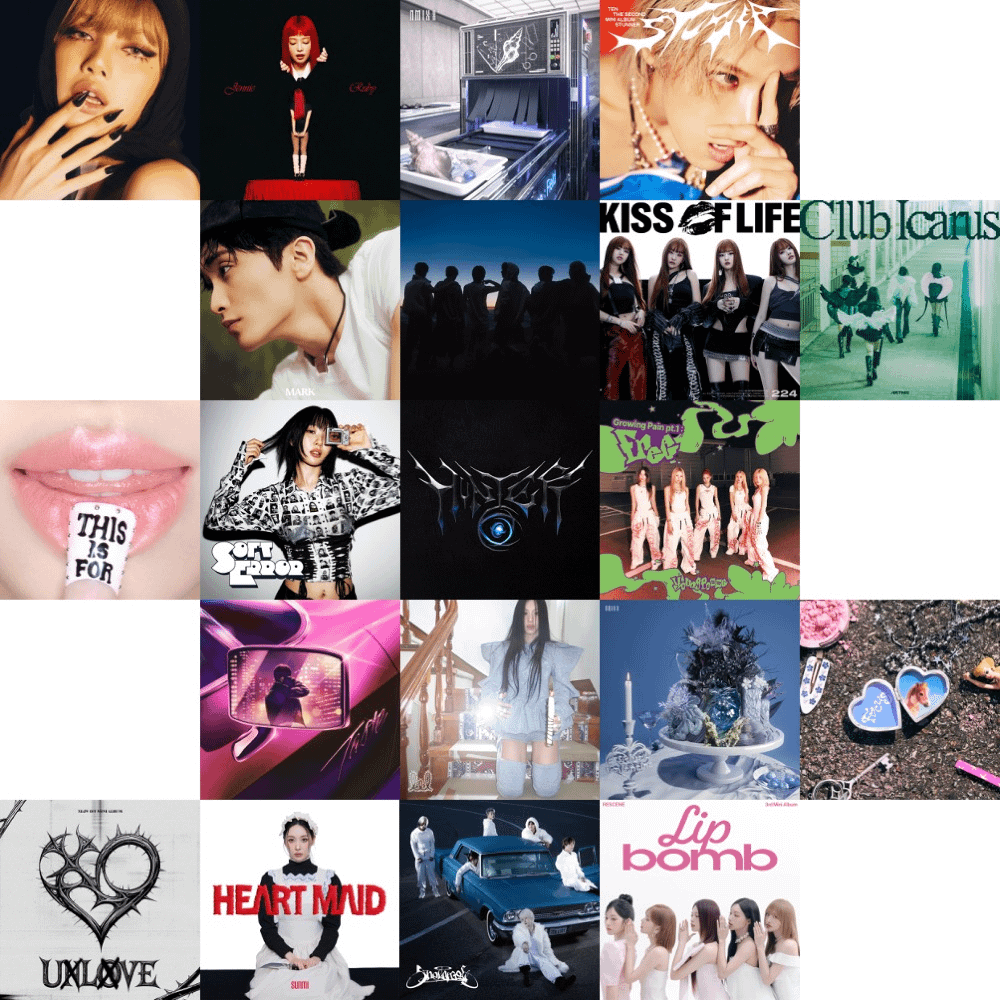
>TWICE doesn’t specifically claim to be a specific genre. They’re simply K-pop. In today’s K-pop landscape, where genre influence and labels are often used or flaunted, TWICE doesn’t try to be closer to a specific genre or appear more “native” to it. They simply write “K-pop” boldly on the top layer of their sound. TWICE’s fourth full-length album, “THIS IS FOR,” is a classic K-pop album, bright and cheerful despite the increased proportion of English lyrics. Not a single track stands out or falls flat, flowing smoothly through all 14 tracks. The smiling voices of the TWICE members deliver the vocals and rap that make good K-pop. In a past Nocut News article, TWICE was described as “the team best at performing songs that ‘purely deliver joy,’ the very essence of K-pop, amidst the competition for mania.” While the group’s popularity in East Asia, particularly in Japan and Taiwan, was well-known, their popularity in the West, including the United States, has skyrocketed in recent years. In the 2010s, when the third generation was just beginning to debut, there was a vague assumption in Korea that Western fans favored “strong concepts,” and so TWICE’s pop and lively vibe was thought to be aimed at the Asian market. Ironically, this very point has become what Western fans perceive as the queens of Asia, the most K-pop-like K-pop girl group. TWICE’s “STRATEGY,” featured on “K-Pop Demon Hunters,” is an English song, but the moment you hear TWICE’s voices, you know this is K-pop. “THIS IS FOR” continues that trend, and this momentum shows no signs of slowing down.
>**Chaeyoung – “LIL FANTASY vol.1”**
>In this age of self-display, the phrase “taste is talent” is often used. Chaeyoung’s solo debut album certainly deserves such a description. However, it would be unfair to interpret this album solely as a vague, vague, “feel-good” taste. This album goes beyond mere “taste” to a story about “protecting one’s taste.” Beginning with “Avocado,” which speaks of hiding undesirable fruit underground, and concluding with “My Guitar,” which reclaims a dusty guitar, this album reads like a journal of Chaeyoung’s reflections on her own tastes. From the sound to the lyrics to the vocals, a precarious and gloomy atmosphere permeates the entire album. However, her willingness to expose her own vulnerabilities and gaze upon them with affection evokes a sense of solidity. Considering the paradoxical nature of idols and celebrities—who must display themselves ostentatiously but also conceal themselves—this album’s narrative feels all the more unique. As this album is labeled “vol. 1,” I hope there will be more opportunities to explore the secret garden that Chaeyoung has carefully and stubbornly cultivated. “Ribbons,” which ties her shoelaces tightly as she cries, “I have to walk,” amidst a dizzying, collapsing sound, and “Shadow Play,” which unfolds a sorrowful, secretive chaos, are the most beautifully blooming vines in this garden.

2 Comments
>**TWICE – “THIS IS FOR”**
>TWICE doesn’t specifically claim to be a specific genre. They’re simply K-pop. In today’s K-pop landscape, where genre influence and labels are often used or flaunted, TWICE doesn’t try to be closer to a specific genre or appear more “native” to it. They simply write “K-pop” boldly on the top layer of their sound. TWICE’s fourth full-length album, “THIS IS FOR,” is a classic K-pop album, bright and cheerful despite the increased proportion of English lyrics. Not a single track stands out or falls flat, flowing smoothly through all 14 tracks. The smiling voices of the TWICE members deliver the vocals and rap that make good K-pop. In a past Nocut News article, TWICE was described as “the team best at performing songs that ‘purely deliver joy,’ the very essence of K-pop, amidst the competition for mania.” While the group’s popularity in East Asia, particularly in Japan and Taiwan, was well-known, their popularity in the West, including the United States, has skyrocketed in recent years. In the 2010s, when the third generation was just beginning to debut, there was a vague assumption in Korea that Western fans favored “strong concepts,” and so TWICE’s pop and lively vibe was thought to be aimed at the Asian market. Ironically, this very point has become what Western fans perceive as the queens of Asia, the most K-pop-like K-pop girl group. TWICE’s “STRATEGY,” featured on “K-Pop Demon Hunters,” is an English song, but the moment you hear TWICE’s voices, you know this is K-pop. “THIS IS FOR” continues that trend, and this momentum shows no signs of slowing down.
>**Chaeyoung – “LIL FANTASY vol.1”**
>In this age of self-display, the phrase “taste is talent” is often used. Chaeyoung’s solo debut album certainly deserves such a description. However, it would be unfair to interpret this album solely as a vague, vague, “feel-good” taste. This album goes beyond mere “taste” to a story about “protecting one’s taste.” Beginning with “Avocado,” which speaks of hiding undesirable fruit underground, and concluding with “My Guitar,” which reclaims a dusty guitar, this album reads like a journal of Chaeyoung’s reflections on her own tastes. From the sound to the lyrics to the vocals, a precarious and gloomy atmosphere permeates the entire album. However, her willingness to expose her own vulnerabilities and gaze upon them with affection evokes a sense of solidity. Considering the paradoxical nature of idols and celebrities—who must display themselves ostentatiously but also conceal themselves—this album’s narrative feels all the more unique. As this album is labeled “vol. 1,” I hope there will be more opportunities to explore the secret garden that Chaeyoung has carefully and stubbornly cultivated. “Ribbons,” which ties her shoelaces tightly as she cries, “I have to walk,” amidst a dizzying, collapsing sound, and “Shadow Play,” which unfolds a sorrowful, secretive chaos, are the most beautifully blooming vines in this garden.
Chaeyoungs album was so good!