
Deleted my original post by mistake so here’s a second go ahead (mercury retrograde) 😩
Howard alum here and longtime BTS fan. I fell down an Arirang history rabbit hole and discovered a fascinating connection to Washington, DC and my alma mater, Howard University.
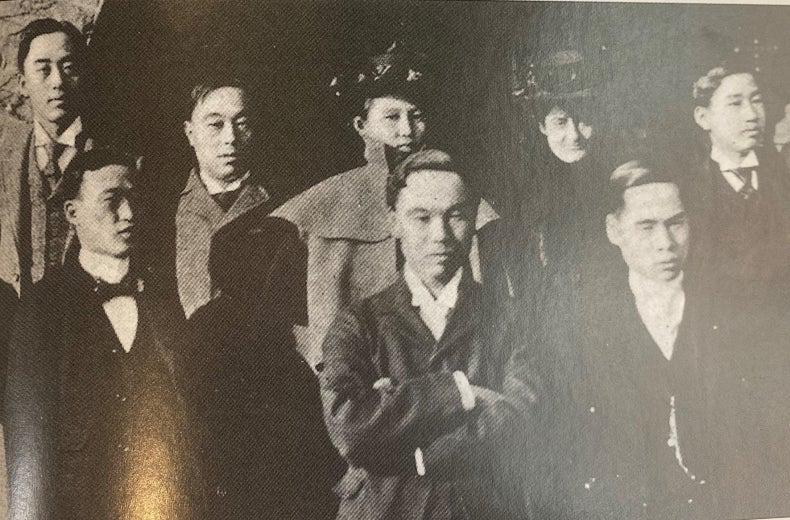
Many people online say Arirang was first recorded in the U.S. in the 1890s. What is documented by the Library of Congress is that in 1896, American ethnologist Alice Cunningham Fletcher recorded Korean students singing a song she labeled “Love Song: Ar-ra-rang.”
These cylinder recordings were made in Washington, DC and are now preserved at the Library of Congress through the American Folklife Center.
According to reporting from WETA’s Boundary Stones project, seven Korean students were enrolled at Howard University in 1896. Their singing reportedly drew attention on campus, suggesting there was an active Korean musical presence at Howard during that time.
Howard may not have been the recording location for Arirang, but it existed within the same DC ecosystem where Korean students, culture, and music intersected with American university life.
Later, during the Japanese occupation of Korea, Korean students and activists around the world continued using song, language, and performance as tools of cultural survival and resistance.
Washington, DC became an intellectual hub for anti-colonial thought and Howard sat in the middle of that broader global conversation.
As a Howard alum, that lineage of global solidarity means a lot. And as a BTS fan, knowing how deeply Arirang is tied to survival, memory, and identity makes its continued cultural presence feel even more meaningful. 🫰🏾💜 H U + Borahae (보라해)
More here (Library of Congress):
https://guides.loc.gov/korea-folklife
If you want to hear the original recordings, there’s a compilation in a drive here: https://www.ambientscape.com/korea-collection
by GingerTropics1960
3 Comments
https://preview.redd.it/47uxkpn9tqog1.jpeg?width=2048&format=pjpg&auto=webp&s=57bacdcb099f1024b4467c53b0862bb50313f90f
ARIRANG 1896 ➡️ 2026
This whole connection is so fascinating to me. I just love how bts concepts actually make you research meaningful histories and theories
Thanks for the write up!
I’m having some complicated feelings though. Those Korean students didn’t simply encounter American student life. Howard is an HBCU. The cultural exchange would have been very different compared to other private colleges. Additionally, this also colors the type of anti-colonial rhetoric those students would have absorbed.
It’s kinda disappointing because the teaser just whitewashed the student body. But when black people talk about being erased from conversations, movements, and literal history… It’s met with indifference, frustration, accusations, and other forms of “please shut up and let us have fun.” **Not you, op!** just in general.
I just wanted to enjoy new music, and learn some Korean culture. There’s just always gotta be something