
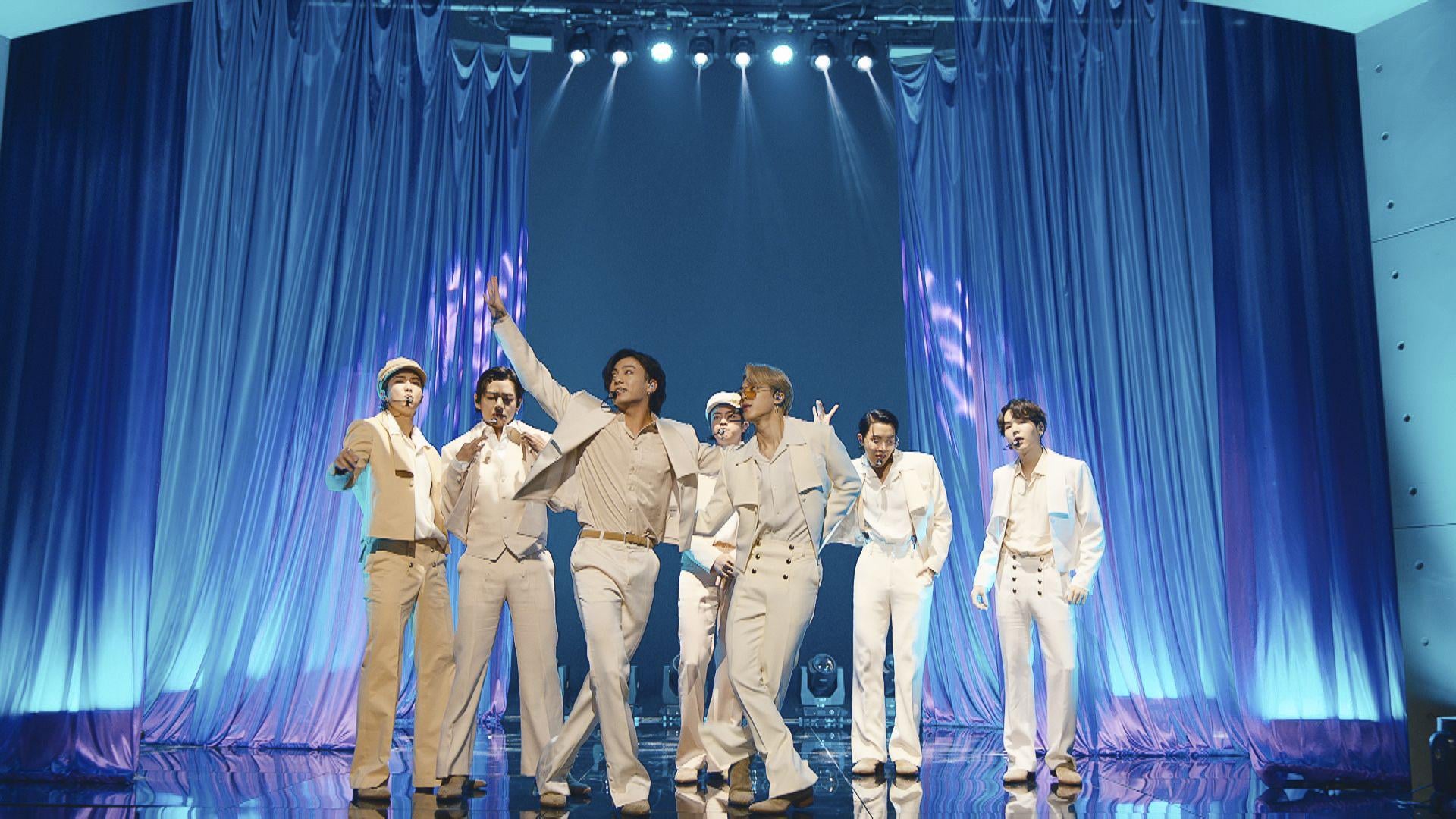
I just came across this article by Tom May for Creative Bloq entitled, "What the insanity around BTS can teach us about branding in 2026," and I'd love to get fellow ARMYs' thoughts on it. None of us are strangers to the poor treatment BTS receive in the media, but none of us are strangers to Hybe's seedy inner workings either.
Still, I hate to see corporate strategy equated with BTS's emotional impact. I also thought the explanation of the "scarcity model" and obtaining tour tickets was extremely oversimplified at best, inaccurate at worst.
I know this is an article from what seems like a smaller-scale site geared towards branding and marketing professionals. It's also not the worst media treatment of Bangtan I've seen by a long shot. But I worry about ARMYs being painted as slaves to parasocial relationships with BTS. I've never seen any other fandom or group written about this way.
by illeee_girl
9 Comments
Holy crap!! I saw this article earlier today and I was floored!!! I wanted to post it here but I couldn’t find it again!
Is this how BTS and ARMY have been treated before!?!
The author completely missed the most interesting thing about BTS’s branding, which is that ARMY has its own official logo and branding that is distinct from BTS. There is also a sense of shared values underpinning both brands.
I think this is a case of a local seeing the effect BTS has and trying to analyze it without really understanding what they’re seeing because it’s more nuanced than they expect.
I could end up in the minority as more people chime in, but I don’t think this is particularly bad. The author definitely isn’t a consumer of kpop and has chosen BTS as the poster child of the genre, but to me that’s a sign of BTS & ARMY being well known.
There are oversimplifications and generalizations that, while lacking depth, could arguably apply to most of the successful kpop groups. (BTS & Hybe are *far* from alone in fostering parasocial relationships, and of course all the groups and their offerings are ultimately curated & manufactured to be profitable – the music industry IS an industry, and companies exist to profit from products & services.)
In parts, they’ve shoehorned BTS into the position they’re trying to make. (Bantan Universe is definitely a thing, but you don’t need to understand it or follow it to be a fan of BTS music… I’m sure there are other kpop groups where their fictional storyline(s) play a much more central role on all of their comebacks.)
The part about artificial scarcity strikes me as an attempt to tap into a very topical idea. I’ve seen a dozen articles lately about how the intensifying K shaped economy is forcing brands to stop catering to the middle and pick either a value/bargain/high volume approach or a high value/low supply approach to match up with one side of the K. It’s not incorrect or even unfair to analyze how performers & their companies can make a profit in a world where endless streaming is the default for most of the target audience. It arguably is unfair to imply the members are deliberately making themselves difficult to access to make more money, especially when they’re about to begin a world tour that’s going to keep them busy for more than a year of traveling & tour dates, but the mere fact that concerts sold out the way they did (how many of us spent hours watching available tickets disappear during presale?) validates the statement that there is more demand than supply for the current “product” that’s available.
Honestly, my biggest takeaway from the article is that BTS is so successful at building connections with fans and demand for what they offer that anyone who wants to have a successful marketing strategy should study them. Take away the trite ‘uninitiated’ platitudes about kpop and that’s what I think the article is left with.
Sounds like a noob to Bangtan who is grasping at straws on why their comeback is blowing up. Dude hasn’t even scratched the surface.
It’s not outright bad, but it has the typical approach a lot of people have to treating kpop fans different that makes me roll my eyes every time I come across it. It’s always parasocial lectures when it comes to BTS or Taylor Swift fans, but these fandoms don’t really act any different than sports fans or video game fans.
*”The result? Fans like Leslie, a 28-year-old from New York, who* [*told The Guardian*](https://www.theguardian.com/business/2026/jan/22/k-pop-bts-tour-music) *she’s planning to attend 22 shows across 11 cities, spending at least $6,000. Or Cailey from New Jersey, who says “BTS got me through the worst parts of my life.” These aren’t just customers. They’re emotionally invested stakeholders who have made the band part of their personal identity.”*
Someone remind me again how much season ticket holders spend on sports or football fans spend on the Superbowl cause…..
Also, BTS has pushed back against fans before such as Jin’s “Go [to the] hospital please” or Tae’s “Get out of your delusions” (can’t remember the exact wording). However, Korean celebs aren’t going to act like western celebs and “clapback” and that goes from Korean actors, musicians, gamers, youtubers, athletes, etc.
Also, the Bangtan Universe isn’t something new to musicians. Lots of musicians/bands have had continuing storylines in their music that drives fans to follow along/create theories/etc. Coheed & Cambria is famous for their albums being a direct link to a whole sci-fi saga/fictional world. Is it really so crazy that BTS also does this?
It just feelsl like the whole tone is predicated on “crazy parasocial [female] fans” being tricked by this big corporation who MANUFACTURES the members and milks fans dry through dangerous parasocial relationships. Tired, trite, done before….please come up with more interesting (and less patronizing) analysis because I’m tired of reading this same thing over and over and over.
Edit: Also, I couldn’t actually find a source for the quote, “Hybe 2.0: an experience model based on scarcity.” However, the scarcity for BTS’s comeback isn’t generated through branding. It’s generated because they’re one of the biggest artists in the world with one of the most anticipated comebacks + the uniqueness of them being celebs that had mandatory enlistment. The band and their real life circumstances are what is generating the scarcity (especially in regards to touring), not the company. Also, plenty of artists have fan pre-sales for concerts. The truth of the matter is that the atrocious monopoly created by LiveNation/Ticketmaster make this one of the few ways artists can at least try to keep tickets in the hands of fans and out of the hands of resellers/scalpers. If there was going to be an example of a band that generates scarcity through branding, I feel like Blackpink fits that model much more than BTS (and I don’t mean this in a shady way but YG has mentioned how scarcity is a branding tactic for Blackpink to build hype and this reflects the amount of music/content they’ve released since their debut).
Articles like this feel really outdated, reading as if BTS are still proving themselves to the West as an emerging global act. That framing may have made sense around 2017–2018 during their initial breakout, but applying it now ignores nearly a decade of concrete achievements and industry wide impact.
BTS are no longer a question mark, or a moment where people were finding out about K-pop for the first time. They are global players with proven staying power.
They’ve already reshaped how global charts work, how touring can be expanded during the pandemic with live streaming and connection, and even how award shows operate. They’re no longer reacting to the industry, the industry has been reacting to them.
At this point, it feels almost silly to see takes where the author seems unwilling to believe what’s right in front of them, the traction BTS’s comeback and tour are generating.
Framing this moment as a “masterclass in modern branding” completely misses the point. This isn’t a calculated reinvention or marketing experiment. This is simply BTS returning to their basics.
Their fandom (yes we are loud and PROUD ARMYs) along with casual listeners and even bystanders, is naturally getting swept up in what feels like a genuine homecoming rather than a manufactured moment.
Those living unaware suddenly see this massive purple wave coming at them and say it is “Marketing”. BTS playing 81+ shows while ensuring ARMYs have the opportunity for first dibs (while turning off dynamic pricing, mind you!) is now seen as a scarcity tactic because the demand is overwhelming.
If we’re going to talk about “manufactured scarcity” then I’m gonna need them to actually write about Ticketmaster’s monopoly on touring, the lack of regulation, and a system that actively encourages scalping and price inflation. Their system doesn’t just hurt fans, it distorts demand, punishes artists who try to be fair, and increasingly damages local tourism economies that rely on accessible live events rather than artificially inflated resale markets.
This is just BTS and ARMYs reunion, but the entire world be watching from the sidelines with their own theories lol. They better buckle their seatbelts, because this is just the beginning 😝
This is just embarrassingly bad journalism. Not only is most of his information incorrect but he’s also unable to connect any of his theories or points to any kind of understandable conclusion. I’m pretty sure this guy just hates BTS/kpop/boy bands and wanted to bitch about them in a way that he thinks makes him look smart and cool.
I love the responses to this because I rolled my eyes after reading it the first time too. The focus on fan ages like they’re desperately trying to peel away from the 15 year old narrative is pathetic, focusing on how much we spend collectively on them… it misses the mark entirely of what the article was intended to be about.
If they want to talk about branding they should talk about kpop as a whole and how BTS’s social presence is a huge part of that branding. Kpop artists have to be personable to fans like they could be your best friend. That’s what they’re missing. They’re missing the cultural aspect of why they’re doing what they’re doing and just focusing on fan behavior still making us look like the crazy fangirl they always want us to be.
The author touches on something interesting but doesn’t know enough about BTS and ARMY to make the most of it.
He seems to think that “parasocial relationships” are something unique to BTS/ARMY that Hybe somehow invented and pushed on unsuspecting girls. But parasocial relationships have existed, and been encouraged by the movie and music industry, even since celebrity became commodified in the early 20th century. That’s not what makes BTS different.
What makes them different is the strength and two-way nature of the connection, and that’s not the product of some grand strategy devised by top execs around 2010-12. It was more serendipitous than that. We all know (but he clearly doesn’t) that one of the many reasons BTS blew up is that their limited resources in their early years forced them to innovate and use social media to build their fandom, at a time when nobody was doing it yet. It was born out of necessity, and because they were unique adversarial circumstances, it built a two-way connection between the members and their fans that is also unique.
So the different nature of the BTS/ARMY relationship was more of an improvised, mutual process. Of course it’s been actively encouraged by the company over the years, and more and more so, but that’s still its roots and it gives it an organic core that even newer armies can feel.
But it’s certainly the case that the BTS/ARMY relationship has become a blueprint for the fandom industry, and that’s the interesting bit imo. No doubt Hybe and others are studying it very closely and trying to figure out how they can reliably replicate the mechanisms at scale and across groups. That’s what they mean when they say they’re “studying the psychological mechanisms of falling in love”. The thing is, it’s not that easy to engineer and control. If it was, we’d have dozens of BTS by now.